A Cornishman with motoring aspirations
If you were to discuss the history of the British sports motoring, there are many names that have grown to be famous, however there is one that stands out as perhaps one of the most interesting, yet unsung names in automotive history, Cornishman Donald Healey.
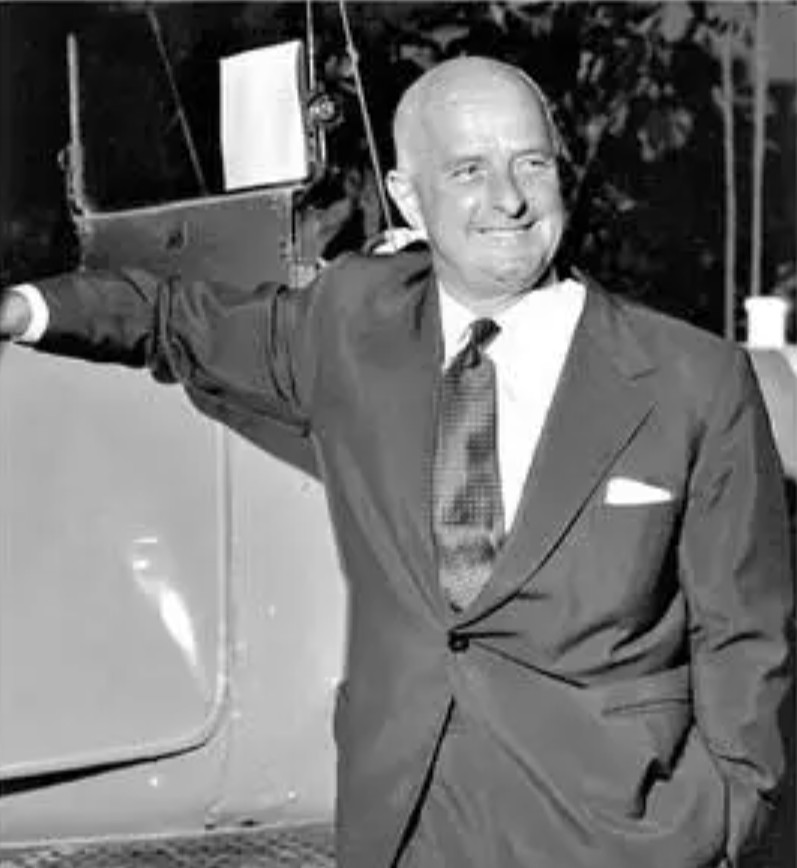
Rather surprisingly for such a famous name, Donald Mitchell Healey CBE came from humble Cornish beginnings, as the son of Emma and Frederick Healey, owners of a general store in Perranporth. However, the story of Healey’s motoring escapades began in 1920, with Healey opening a garage in Perranporth. This came off the back of Healey’s stint working for the Air Ministry checking aircraft components after a brief and failed attempt to become a pilot with the Royal Flying Corps during the First World War.
One of the first international successes for Healey was his victory at the Monte Carlo Rally in 1931 which saw him driving an Invicta Low Chassis, beating some serious competition from the likes of Lagonda and Bugatti. Healey, ever the visionary wanted more. Healey’s first attempt at building his own car came in 1946 as he progressed into his role as technical director at Triumph. His first prototype showed little promise being nicknamed ‘The Horror’, due to its paper-thin chassis. According to Healey expert Warren Kennedy it required welding after every test drive as the chassis ‘flexed and fractured’.
The first mass production Healey would come in the form of the Healey Elliot, a car with styling based on ‘The Horror’. This was powered by a Riley sourced 2.4 litre inline 4 engine and became the basis for numerous body styles such as the Westland Convertible and the Silverstone Sports Tourer. The Elliot went on to win the Alpine Rally in both 1947 and 1948. A class win at the 1948 Mille Miglia saw it beating entries from Fiat, Lancia and even an Alfa Romeo 6C 2500, a formidable racing chassis of its day. This would later evolve into the Silverstone based Nash-Healey era. A failed negotiation to use Cadillac supplied 5.4 litre V8 engines led to interest from the Nash company to supply inline 6 engines from their ‘Ambassador’ saloon car.
Back in England, the inline 6 Silverstone was powered by an Alvis engine and badged as an Alvis-Healey with more reserved styling. However, it would be the next chapter for Healey that would cement his name in the history of sports motoring, the era of Austin-Healey. Up to this point, Healey cars had all been bespoke and very expensive to own and operate. The goal of the new merger was to build cheaper cars that kept the performance credentials of the Healey name. The first model to come from the partnership was the Austin-Healey 100, an updated version of the Nash-Healey chassis with the 2.6 litre inline 4 of the flagship Austin A90 Atlantic. Even the earliest 100 BN1’s could achieve a top speed of over 100 miles per hour. An impressive feat for the mid-1950’s, and updated versions such as the BN2, M and S all took this performance further still. The 100S was most notable for its involvement in the 1955 Le Mans disaster. In the most fatal accident in motorsport history, it hit the rear of a Jaguar D-Type causing a Mercedes 300 SLR to veer into a crowd, killing 84 people. The 100 would later be fitted with a 2.6 litre C-Series inline 6, creating the more road-biased 100/6 in 1956.
The 100/6 ultimately saw the transition of the ‘big Healey’ models away from racing which would lead to the ultimate incarnation of Austin-Healey, the 3000. The 3000 was a fully-fledged road tourer with a 3-litre version of the C-Series engine and a more luxurious interior. It did have competition history, but the focus began to lay upon the Austin Mini Cooper S for motorsport success. The final project Healey would take on would be the Jensen Healey of 1972, a Lotus powered roadster that ultimately failed to find success, taking the Healey name with it.
Donald Healey would retire in Truro and died in 1988 aged 89. He has a window dedicated to him in St. Michaels Church in Perranporth.
Also included under Cornish People